Monday, October 23, 2017

How can we shift a mindset?

How can we shift a mindset?
    “Is this for a grade?”.  I often hear those words from my students.  How do we shift our students’ mindset into owning their learning?  I believe it’s through the use of  COVA model.  Some of my students have begun creating online portfolios as a way to leave their mark.  They are quite curious and excited to work on their sites; however, they are a little unsure of the freedom to choose their learning paths.  Students need to “acquire technical skills for their digital lives but also engage in work that provides richly teachable moments” (Watters). Creating eportfolios with my students has provided many teachable moments in class. For example, one of my students asked if she could create a screencast that would teach others how to login into Classlink.  As a result, we began to explore screen cast extensions. She researched a few extensions and chose the one she was most comfortable with.  It’s amazing to witness a nine-year-old narrate a video with step by step directions that will help others login.  Another group created a tutorial video explaining what symmetry is.  They asked for directions but I instructed them to choose the method that worked for them.  Who owns the eportfolio?  These students are creating and producing online productions using high, level learning skills that they can take with them outside the classroom.  I believe my students own their eportfolio because they are becoming “effective architects, narrators, curators, and inhabitants of their own learning” (Harapnik). My students are taking ownership of their learning because I have given them the opportunity to make it meaningful to them.  According to Dwayne Harapnuik, “making meaningful connections is what leads to learning.”  This brings me back to the question, how can we shift a mindset? It is really the students that need to shift their mindset about owning their learning or do educators need to shift their mindsets on how students learn?


Harapnuik, D. (n.d.). It's all about learning. Retrieved October 22, 2017, from                                                                         http://www.harapnuik.org/?page_id=6050
Watters, A. (2015, July 15). The Web We Need To Give Students. Retrieved October 22, 2017, from https://brightreads.com/the-web-we-need-to-give-students-311d97713713     


Monday, October 16, 2017

Why Blog?


    Seth Godin describes blogging as a way to “force yourself to explain why you did something by responding out loud.” I started blogging this summer as a way to reflect on my teaching experiences.  I have never been a writer so blogging has been a great way to extract my beliefs and thoughts into words.  My Teaching Blueprint has enabled me to share my thoughts and voice with whomever cares to listen.  This blog was started because I needed a way to express my “Why” for teaching.  Having this blog has helped me recognize that my voice matters and is significant.  I now believe that we must use our voice to reflect and motivate those who happen to read our conversations.  That’s why sharing our ePortfolios with our classmates/peers is such a powerful opportunity for us to grow and learn from each other.  We are not alone in education.  Sharing our experiences through collaboration allows us to receive feedback that can strengthen our appetite to succeed.


I. (2009, April 18). Seth Godin & Tom Peters on blogging. Retrieved October     16, 2017, from   https://www.youtube.com/watch?v=livzJTIWlmY


Saturday, October 14, 2017

Who owns the learning?  Alan November suggests kids want a voice and want to share it globally.  We live in a world where we are globally connected instantly.  Last year I connected with a teacher from India through Skype and it was a classroom, game changer.  We learned about the Indian culture and my kids were fascinated that they were able to connect with students across the globe.  If I own my learning and seek out my passions why shouldn’t my students?  This year I started “Genius Hour”.  “Genius Hour” is a time where students get to investigate (on their own) and share what they are passionate about.  This has generated a lot of excitement with all of my students.  My students are eager to come to school and are producing presentations that they want to share with others.  They own their learning and it is evident because of their engagement, hunger to present, and desire to research through books and online resources.  

T. (2011, March 25). TEDxNYED - Alan November - 03/05/2011. Retrieved October 14, 2017, from    https://www.youtube.com/watch?time_continue=1&v=ebJHzpEy4bE  


Sunday, October 1, 2017

Leave your Mark

Why I Teach!             

     Think about your favorite teacher the one you just can’t forget.  What did they do to be forever placed in your memory?  Was it a special activity that you remember? Was it the way they never gave up on you? Whatever that teacher did to leave their mark, it’s something you will never forget.  This is why I teach! I want to be the teacher that leaves that lasting impression on her students' lives.  I want to be the kind of teacher they remember. I pray that they remember how I truly cared for them and valued their self-worth. I believe developing relationships with my students is the key to leaving my mark.

#leaveyourmark


Sunday, September 24, 2017

Hope

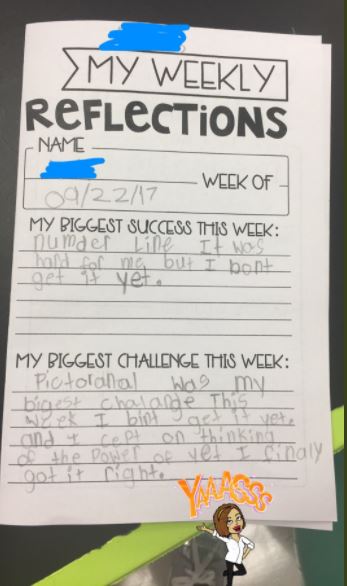
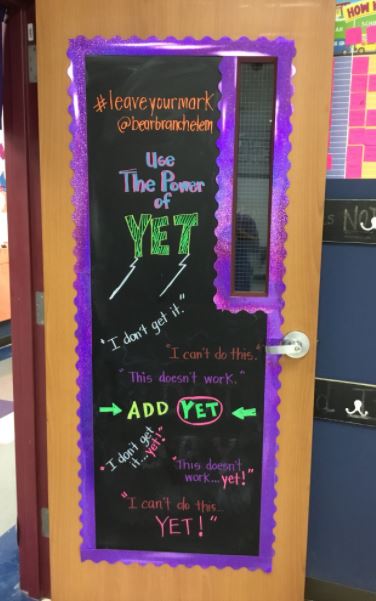
    I believe hope is the driving force toward Success. Hope gives us the desire to push through challenges in order to reach our goals and destination.  One way I teach hope to my students is through the power of “Yet”.  The power of "Yet" gives them a way to reflect and convince themselves that they can push through the challenges they may face.  I have noticed that my students are gaining confidence in their abilities just by adding “Yet”.  


Saturday, September 16, 2017

Student Voice

     A wildly, important goal that I am working on is student voice. Student voice is something I have been working towards and consider it to be an important component in my classroom.  Student voice “is the individual and collective perspective and action of students within the context of learning and education". I started a classroom podcast for my students to share their learning through Podbean.  My plan is to use our podcast station as an outlet to share our learning outside of the walls of our classroom.  I believe student voice matters and when students feel significant they drive their own learning.  According to The Express Tribune student voice “can also strengthen student achievement and foster workforce readiness.”  My goal is to prepare students with tools they can use outside the classroom door.  I don’t think technology can replace the teacher but it is a great tool to promote engagement and teaches skills needed for tomorrow’s world.

Summerford Stars Podcast https://summerfordstars.podbean.com/

Salim, A. S. (2015, September 17). The importance of giving students a voice.
Retrieved September 10, 2017, from https://tribune.com.pk/story/958685/the-

importance-of-giving-students-a-voice/

Sunday, September 10, 2017

What is most important - the what, the how, or the why when it comes to learning and pursuing life goals?

What is most important - the what, the how, or the why when it comes to learning and pursuing life goals?

I believe the most important word when pursuing life goals is the “WHY”.  Starting with a purpose makes the “what” and the “how” fall into place.  Why did I want to pursue a Master’s Degree has been the question that I have had to answer for some time.  My purpose became my passion.  The passion to ensure that all students will be ready for the 21st century.  I want to be a part of the movement to help our schools become the types of teaching structures that prepare our students for the world.  Our world has changed and it's taking awhile for our schools to catch up to 21st-century learning.  Some still teach in rows and deliver the same teaching practices that they have used for years and years.  There is nothing wrong with rows and some the old teaching practices still work but let’s combine the two to develop a “BOLDSCHOOL”  As an educator I am committed to helping develop and push new experiences out, even if I am a lone wolf.

Kieschnick, W. (2017). Bold School: Old School Wisdom + New School Technologies.
    NewYork: International Center for Leadership in Education.