Sunday, June 3, 2018
Action Research Process
Most teachers reflect daily about how their lessons went. (What could have been done better? What should I change? What’s the true problem?) This is the easy part for me. I am always able to observe and identify what needs to be changed. For example, tweak this part for the next class, add this question, or forget about that activity altogether. The hard part is gathering information through researched literature to make improvements on what needs to be changed. This takes time and let’s face it, time is an educator’s worst enemy but through my DLL classes I was forced to take the time to do it. I started this journey of changing my classroom environment in 2016 before I started my DLL classes. I realized that I needed to be more flexible on how I delivered information to my students. The question I pondered was… How can I differentiate for all my students and how could this be done? I had to use our district curriculum and I had to follow the recommended time allowance but the way I delivered the information was up to me. My first avenue of change was flipping my classroom. This experience was good but not great. Students still needed to hear the lesson even though they listened at home. The online collaboration piece that I created was great, learning was taking place at home for most, but some students didn’t have access to home computers. Something was missing from the puzzle and I researched all summer to figure out what it was. In August, I started my first DLL class and in 5305 I was inspired to test my innovation plan. It was through blended learning that I could reach each student at their individual level. I began combining the two pieces together (online, and teacher-led) and that combination was the piece I needed to complete the puzzle. In October I began using our LMS (Canvas) program to display some of the lessons that I created. I also used online tools that personalized student learning (Think Through Math, Prodigy, ilearn, and Khan Academy). Personalized learning paths was something that I also created for students to promote ownership and self-directed learning. Making this big change gave me the freedom to become the facilitator, form relationships, and differentiate the needs of my students. I still lead a mini-lesson but after the mini-lesson students are self-directed and take the lead. I believe I was using action research plan without knowing what it was called because I was reflecting and developing a plan to meet the needs of my students. Benchmarks and past STAAR scores were the tools I used to measure my results. I’m so anxious to see what this years STAAR results show in year two of my change implementation. Next year, I am moving to a different position. I will be the Advanced Academic teacher for another campus plus I will be able to coach other teachers within my new school. I’m ready to try out my innovation plan with other teachers. You must take the “Risk” and do what’s best for kids no matter how difficult it may seem. The benefits outweigh the risk! I’m so passionate about blended learning that I am presenting this summer at Region 6 in Huntsville, Texas (June 7), Region 10 in Plano, Texas (June 11) and at ISTE in Chicago, IL (June 24).
Wednesday, April 11, 2018
Leadership is Key
Chambers and Speirs describe what creates a successful initiative in their podcast “What Makes a Tech Friendly Head of School?”. They describe that a successful initiative is determined by leadership. Leaders must willing to set the vision and lead the way through modeling the required expectations. These leaders must also commit to what they are expecting others to do. For example, if the school initiative is using Twitter to tell the school story then the leadership must model this behavior as well. They should also be knowledgeable about the initiative project and be able to articulate their message with others. It’s important for these leaders to seek out others to join their innovation and empathize with those who can’t relate to the plan. The most important key to creating a successful initiative is being flexible and building upon the failures.
Chambers, B., & Speirs, F. (Out of School). (2016, January 11). 164: Deploy 2016, part 2: What makes a tech friendly head of school?[Audio podcast]. Retrieved from https://outofschool.net/2016/01/11/164-deploy-2016-part-2-what-makes-a-tech-friendly-head-of-school/
Friday, January 5, 2018
She's probably in your class.
Do you recognize this girl? You know the girl that is constantly chatting with her friends and smiles all the time? She is also the one that struggles to learn concepts the first time around and she needs your constant support. Do you know why she struggles? Did you know that she has been enrolled in two other elementary schools and this is the third? Did you know that each time she has moved it has been because her parents have struggled to meet the rental payments on their home? Did you know that her previous teachers rolled their eyes at her every time she struggled and asked for help? Did you know that her teachers have told her she would never be a high achieving student? It was either sink or swim and most of the time she sank.She's probably in your class and you have the chance to be the number one difference maker in her life. Show her that you care and guide her towards success. Help her find that "Just Right" way of learning. Let her choose her learning outcomes through personalized menus that allow for multiple ways of learning. Let her express her comprehension through uncommon learning activities. Most of all....be her BIGGEST CHEERLEADER! If you do that she will remember you always.
That girl was me. Dr.Joyce Slone was my biggest cheerleader but I wasn't blessed with her presence until 12th grade. She treated me with respect and dignity. She was more than just a teacher, she was an influencer. She not only influenced me but made me believe I could accomplish whatever I wanted in life. She taught me to never give up on my dreams. It's because of Dr. Joyce Slone that I have a burning passion to learn and teach others. I will continue to honor her every day not only in my classroom but in life. I want my students to feel exactly the way Dr. Joyce Slone made me feel....LOVED!
Wednesday, November 22, 2017
Moving Forward
When I think about the way I
learned I remember there was only one way to do it. There wasn’t a choice and the lessons were not
customized to suit my learning style. For example, in math class, I
remember my teacher placing these big, red, x marks on my paper because I couldn’t arrive at the correct answer.
I struggled with mastering the algorithm to subtract in third grade.
Once I
finally mastered the steps I never really understood what was actually taking
place until I became a teacher of mathematics. Fast forward to today, children
are given multiple ways to solve subtraction in order to be successful.
Number lines, place value, base-ten blocks, and the infamous algorithm are
tools that students have the option to use. Today’s education learning is
personalized for students by giving them the tools they need but should it stop
there? Shouldn’t we continue to develop a
more personalized learning environment? “Our students want to be creative
and collaborate, utilize technology for learning, connect with their peers in
other countries, understand the messages that media convey, and solve
real-world problems” (Sheninger, 2016)
Think
about it for a moment…personalization exists everywhere. Facebook is customized to suit our interests and
needs. Have you ever seen sponsored ads pop up on your feed? Most
of the time these are items we have searched for on Amazon or something that
you have liked in the past. We can also create groups that feed our
passions and inspire us. It’s collaboration, education, and personalized
learning. Have you ever been on Pinterest? Pinterest also customizes interests based on the
boards you have pinned. When I go to my Pinterest feed I am surrounded by products and
lots of teacher ideas that I don’t have to search for. To be honest
my Pinterest boards are mostly made up
of teacher “stuff” because I’ve pinned thousands of teacher-related
items. This is how Pinterest has personalized my
learning experience.
Sir Ken
Robinson explains that education doesn’t need a reform because that requires us
fixing it. Education is not broken but education needs a revolution”
(Robinson, 2010). Imagine what it would be like if students were excited
about to school. I have really tried to make this a reality in my
classroom. I’ve changed the space,
adapted new ideas, changed my mindset about how instruction should be
delivered, and created personalized learning experiences for my kids. Quite
frankly I am obsessed with revolutionizing my classroom for my kids because
they deserve it! “You have the same choice every day. You can
choose what’s always been done-the safe and easy. Or, you can choose what’s
less simple, potentially more difficult, and absolutely more rewarding” (Neslonely and Welcome”).
Kieschnick, W. (2017). Bold School: Old School Wisdom + New
School Technologies.
NewYork: International Center for Leadership in
Education
Nesloney, T., & Welcome, A. (2016). Kids deserve it!: pushing
boundaries and challenging conventional thinking. San Diego, CA: Dave
Burgess Consulting, Inc
Robinson, K. (n.d.). Bring on the learning revolution! Retrieved November 22, 2017, from https://www.ted.com/talks/sir_ken_robinson_bring_on_the_revolution
Sheninger, E. C. (2016). Uncommon learning: creating schools that work for kids. Thousand Oaks, CA: Corwin.
Sunday, November 19, 2017
Scouts Can't Wait!
Disruptive innovation is important because it can be a catalyst for change in education because those willing to take the risk can persuade others to follow. It comes about by scouts who are willing to explore and collect data in order to lead change in our schools. It’s not about giving up all of the ways we have taught our students, it’s about how we can customize the students’ needs. Michael Horn describes how using the blended learning model can personalize learning for our students. Personalized learning gives students a sense of ownership. Students who control their time, place, path, or pace are more likely to fill gaps in their learning because they do not move on until mastery is met. One way to that I allow students to control their pace and place is through Canvas LMS. It enables my classroom to be a blended learning environment through online learning. Canvas lessons are set up for the week and students can work through them at their own pace and place because it’s available to them at home or school. In class, students move through activities using a choice board along with an accountability sheet. I use a combination of the station rotation model and individual model to meet the needs of my students. Technology should be used because of a content idea and a way for students to showcase their learning with the world. I’m so excited to be reading “Blending” because it confirms some of the things I have already started in my classroom. Since reading “Blending” I have begun to make even more changes that can help personalize my students learning.
Horn, M. B. (2015). Blended: using disruptive innovation to improve schools. San Francisco, CA:
Jossey-Bass.
Sunday, October 29, 2017
Our Stories
Every one of us has a story to tell. It’s where we have been, where we are, and where we are going. Life creates our stories and for many of us, there are stories still left to be written. I believe ePortfolios are the best storytellers we can have. It sets the stage to tell who we are and what we stand for. You can tell a lot about a person just by viewing their home page. I’ve looked at several examples and I can feel the hard work and passion each person has put into their ePortfolio. Our stories should not stall in the creation process, they should be shared. A story only comes alive once it is read. I believe sharing our stories with others will give one insight into our passions and what drives who we are. They might also inspire others. Isn’t that what we want to do, inspire others? “To be a person is to have a story to tell.” – Isak Dinesen
102 of the Most Inspiring Storytelling Quotes of All Time. (2016, May 18). Retrieved October 29, 2017, from http://typeacommunications.com/102-of-the-most- inspiring-storytelling-quotes-of-all-time/
Monday, October 23, 2017
How can we shift a mindset?
“Is this for a grade?”. I often hear those words from my students. How do we shift our students’ mindset into owning their learning? I believe it’s through the use of COVA model. Some of my students have begun creating online portfolios as a way to leave their mark. They are quite curious and excited to work on their sites; however, they are a little unsure of the freedom to choose their learning paths. Students need to “acquire technical skills for their digital lives but also engage in work that provides richly teachable moments” (Watters). Creating eportfolios with my students has provided many teachable moments in class. For example, one of my students asked if she could create a screencast that would teach others how to login into Classlink. As a result, we began to explore screen cast extensions. She researched a few extensions and chose the one she was most comfortable with. It’s amazing to witness a nine-year-old narrate a video with step by step directions that will help others login. Another group created a tutorial video explaining what symmetry is. They asked for directions but I instructed them to choose the method that worked for them. Who owns the eportfolio? These students are creating and producing online productions using high, level learning skills that they can take with them outside the classroom. I believe my students own their eportfolio because they are becoming “effective architects, narrators, curators, and inhabitants of their own learning” (Harapnik). My students are taking ownership of their learning because I have given them the opportunity to make it meaningful to them. According to Dwayne Harapnuik, “making meaningful connections is what leads to learning.” This brings me back to the question, how can we shift a mindset? It is really the students that need to shift their mindset about owning their learning or do educators need to shift their mindsets on how students learn?
Harapnuik, D. (n.d.). It's all about learning. Retrieved October 22, 2017, from http://www.harapnuik.org/?page_id=6050
Monday, October 16, 2017
Why Blog?
Seth Godin describes blogging as a way to “force yourself to explain why you did something by responding out loud.” I started blogging this summer as a way to reflect on my teaching experiences. I have never been a writer so blogging has been a great way to extract my beliefs and thoughts into words. My Teaching Blueprint has enabled me to share my thoughts and voice with whomever cares to listen. This blog was started because I needed a way to express my “Why” for teaching. Having this blog has helped me recognize that my voice matters and is significant. I now believe that we must use our voice to reflect and motivate those who happen to read our conversations. That’s why sharing our ePortfolios with our classmates/peers is such a powerful opportunity for us to grow and learn from each other. We are not alone in education. Sharing our experiences through collaboration allows us to receive feedback that can strengthen our appetite to succeed.
I. (2009, April 18). Seth Godin & Tom Peters on blogging. Retrieved October 16, 2017, from https://www.youtube.com/watch?v=livzJTIWlmY
Saturday, October 14, 2017
Who owns the learning? Alan November suggests kids want a voice and want to share it globally. We live in a world where we are globally connected instantly. Last year I connected with a teacher from India through Skype and it was a classroom, game changer. We learned about the Indian culture and my kids were fascinated that they were able to connect with students across the globe. If I own my learning and seek out my passions why shouldn’t my students? This year I started “Genius Hour”. “Genius Hour” is a time where students get to investigate (on their own) and share what they are passionate about. This has generated a lot of excitement with all of my students. My students are eager to come to school and are producing presentations that they want to share with others. They own their learning and it is evident because of their engagement, hunger to present, and desire to research through books and online resources.
Sunday, October 1, 2017
Leave your Mark
Why I Teach!
Think about your favorite teacher the one you just can’t forget. What did they do to be forever placed in your memory? Was it a special activity that you remember? Was it the way they never gave up on you? Whatever that teacher did to leave their mark, it’s something you will never forget. This is why I teach! I want to be the teacher that leaves that lasting impression on her students' lives. I want to be the kind of teacher they remember. I pray that they remember how I truly cared for them and valued their self-worth. I believe developing relationships with my students is the key to leaving my mark.
#leaveyourmark
Sunday, September 24, 2017
Hope
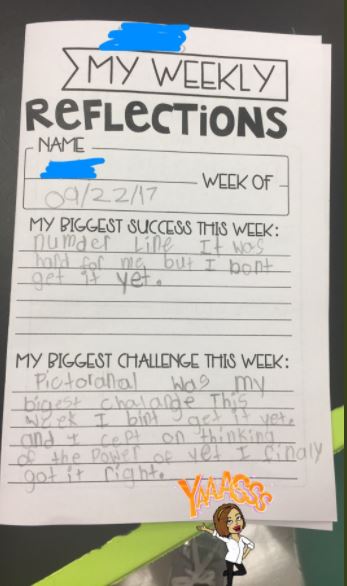
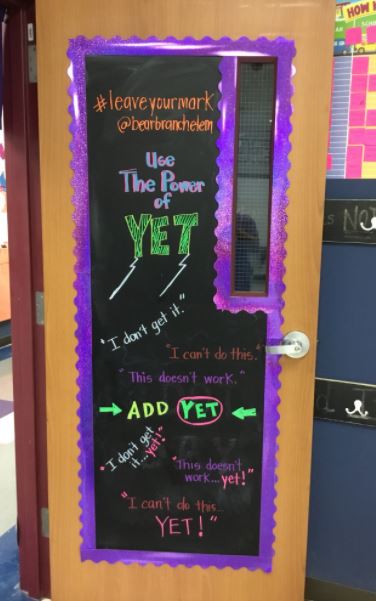
I believe hope is the driving force toward Success. Hope gives us the desire to push through challenges in order to reach our goals and destination. One way I teach hope to my students is through the power of “Yet”. The power of "Yet" gives them a way to reflect and convince themselves that they can push through the challenges they may face. I have noticed that my students are gaining confidence in their abilities just by adding “Yet”.
Saturday, September 16, 2017
Student Voice
A wildly, important goal that I am working on is student voice. Student voice is something I have been working towards and consider it to be an important component in my classroom. Student voice “is the individual and collective perspective and action of students within the context of learning and education". I started a classroom podcast for my students to share their learning through Podbean. My plan is to use our podcast station as an outlet to share our learning outside of the walls of our classroom. I believe student voice matters and when students feel significant they drive their own learning. According to The Express Tribune student voice “can also strengthen student achievement and foster workforce readiness.” My goal is to prepare students with tools they can use outside the classroom door. I don’t think technology can replace the teacher but it is a great tool to promote engagement and teaches skills needed for tomorrow’s world.
Summerford Stars Podcast https://summerfordstars.podbean.com/
Salim, A. S. (2015, September 17). The importance of giving students a voice.
Retrieved September 10, 2017, from https://tribune.com.pk/story/958685/the-
importance-of-giving-students-a-voice/
Sunday, September 10, 2017
What is most important - the what, the how, or the why when it comes to learning and pursuing life goals?
I believe the most important word when pursuing life goals is the “WHY”. Starting with a purpose makes the “what” and the “how” fall into place. Why did I want to pursue a Master’s Degree has been the question that I have had to answer for some time. My purpose became my passion. The passion to ensure that all students will be ready for the 21st century. I want to be a part of the movement to help our schools become the types of teaching structures that prepare our students for the world. Our world has changed and it's taking awhile for our schools to catch up to 21st-century learning. Some still teach in rows and deliver the same teaching practices that they have used for years and years. There is nothing wrong with rows and some the old teaching practices still work but let’s combine the two to develop a “BOLDSCHOOL” As an educator I am committed to helping develop and push new experiences out, even if I am a lone wolf.
Kieschnick, W. (2017). Bold School: Old School Wisdom + New School Technologies.
NewYork: International Center for Leadership in Education.
Tuesday, August 8, 2017
Determination
With determination you can do anything you set your mind to. Last year I decided to step outside of my comfort zone and
flip my classroom. I received the flip classroom certification through Jon
Bergerman (flip classroom pioneer) and learned the components needed to flip my
classroom. The flipped, classroom approach produced a community of online learners.
My students were teaching each other math strategies through online collaborations
after school. I mediated and provided feedback to my students during nightly conversations (online). It made a remarkable difference in their
learning. Students were prepared for the lesson the next day because they took ownership of their learning. One of
my students who struggled to pay attention in class became a leader in the
nightly conversations. He provoked others to think and challenged their ideas. Flipping my classroom has been an amazing experience
for me and my students. I believe the flipped, classroom approach has effectively taught 21st century skills that will transfer outside the classroom . It was a lot of hard work but my kids were so worth it. I took a risk and that risk helped me discover
another way to reach my kids. We must be teachers who continually learn and
try new instructional strategies. When we stop learning we stop growing.
Saturday, August 5, 2017
Self-Worth
On October 26, 1967, Martin Luther King,
Jr. gave a speech to junior high students in Philadelphia. He posed this question to the student body,
“What is your life’s blueprint?”. He
explained how they were building the structure of their lives at that very moment and questioned whether they had a solid foundation. Martin Luther King
Jr. described two principals that needed to be a part of a person’s life blueprint. These principles were self-worth and determination. When I listened to his speech it inspired me and
I began thinking about how this applies to me as a teacher. What’s my teaching blueprint? I decided to reflect and think about how I
was incorporating these two principles in my classroom.
In order to foster self-worth in our
students we must know who they are and what inspires them. We must take
the time to have conversations with them. I learned a great deal about love and empathy through a young man. He had a tough, home life and was very angry all the
time. There was something about him that made me want to gain his trust and I finally did.
To this day he still makes his way through the crowd at football games
just to greet me, and I look forward to it each time! When we form relationships with our students it sends a message that they matter and are significant. Sometimes we get so consumed with data and
paperwork that we forget why we are here. It’s about the kids! Self-worth also applies to teachers. We must start believing that we are difference makers. How can we measure the result and if we were successful? The results are not just measured by passing scores or good observational data, it’s measured by what our students tell us.
Subscribe to:
Posts (Atom)